

Why Old-School Wood Sleepers Are Failing Rooftops — And Why It’s Time to Upgrade
Written by Eli Zuelke
For decades, wood sleepers have been the go-to solution for supporting rooftop HVAC units, piping, and mechanical equipment. They’re familiar, inexpensive, and easy to source, which is precisely why many roofing professionals still default to them.
But the rooftop environment is changing. Roof systems have evolved, building codes have changed, and weather conditions have become increasingly extreme. And suddenly, the weaknesses of wood sleepers aren’t just noticeable, they’re costing building owners real money.

The Hidden Problem With Wood Sleepers
Wood may seem sturdy at first, but rooftops are an extremely harsh environment. Constant exposure to rain, humidity, UV radiation, and snow can break down these supports, leading to swelling, softening, and rot. And as wood expands and contracts, it warps and shifts the equipment resting on it.
This shifting often causes HVAC units or piping resting on these wooden sleepers to tilt. Over time, this tilt can cause equipment to operate beyond its design limits, accelerate wear, and lead to failure years earlier than expected. A misaligned support today becomes a five-figure problem tomorrow.
Green Link’s Solution
Green Link’s engineered supports eliminate this issue. Designed for rooftop environments, they resist moisture, don’t warp, and do not degrade over time. Instead, Green Link stands out for its consistent load distribution, military-grade materials, and long-term reliability, backed by warranties that keep you covered for decades.
What that means for contractors and facility managers is fast installs with reliable support that not only meet all standard building codes but also won’t damage the vital equipment that sits atop them—delivering long-term performance without the headaches of outdated sleepers.
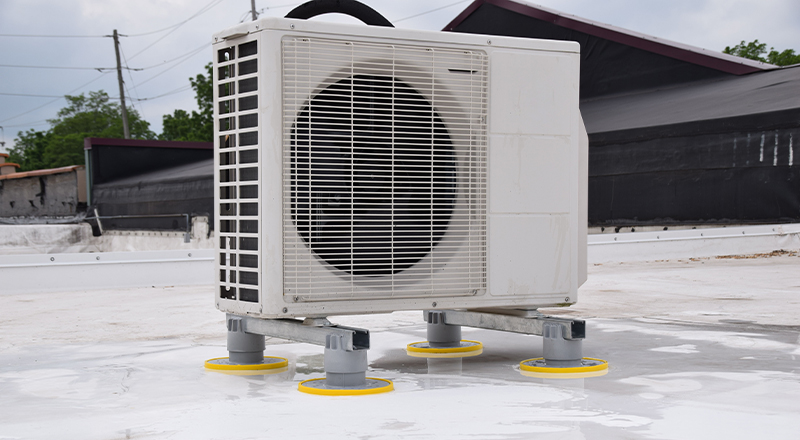
Today’s rooftops demand more than wood can deliver. Get Green Link.